Taxis & Private Transfers to and from Brussels Airport (BRU)
Taxi, Minibus & Group Transportation | Fixed Price | Available 24/7 | Flight Monitoring
Brussels Welcomes the Global Tourism Forum 2026: Why Smart Delegates Are Choosing Group Airport Minivans Over Taxis and Public Transport
2026-05-19 | TRAVEL GUIDE
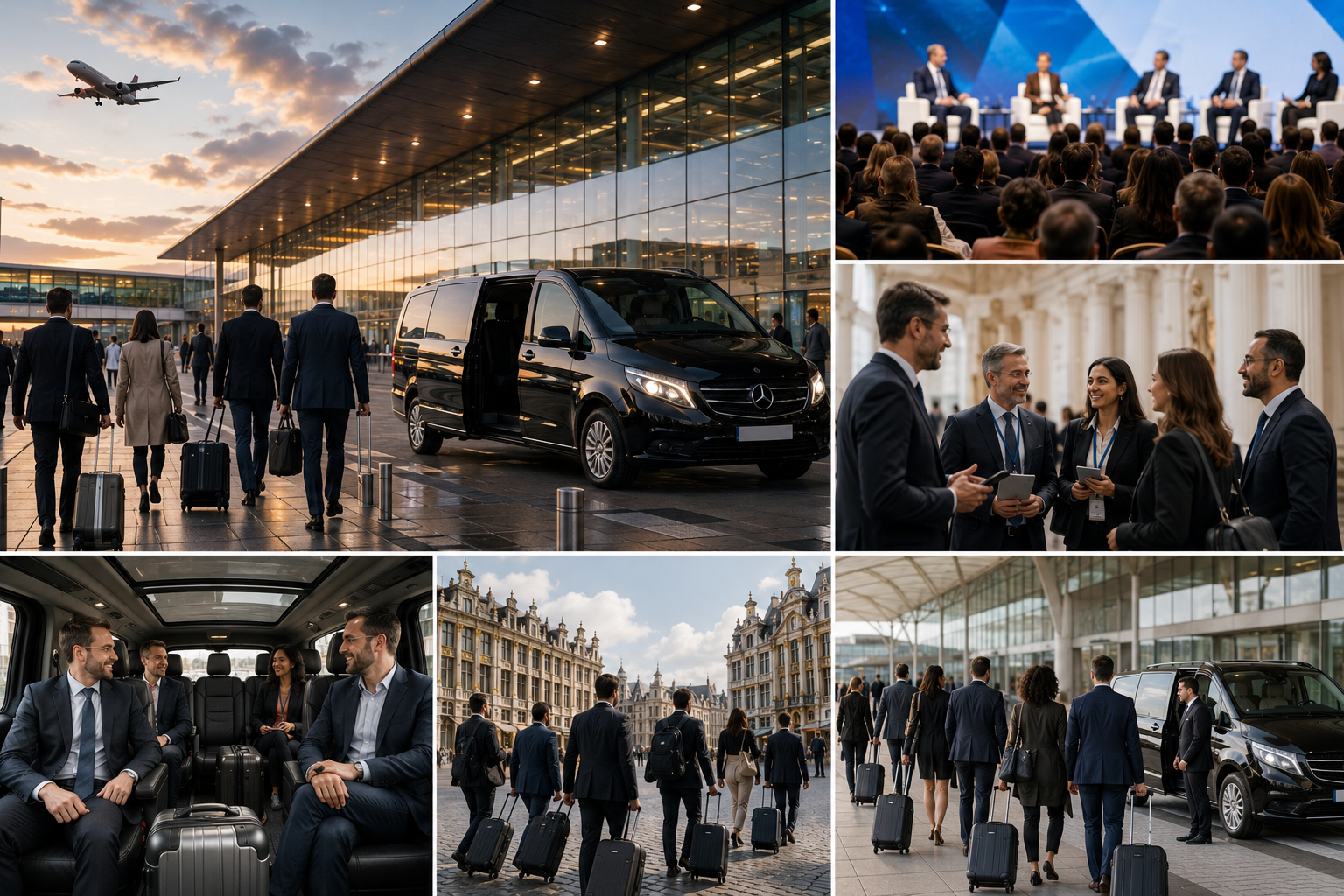
For two days in October, Brussels will become the center of global tourism conversations, international investment strategies, and high-level networking as the Global Tourism Forum Annual Meeting 2026 brings together political leaders, ministers, investors, and decision-makers from across the world.
Hosted at the Royal Museums of Fine Arts of Belgium on 26–27 October 2026, the event is expected to welcome five heads of state, more than forty ministers, and over one thousand senior delegates from the international travel sector. The gathering has evolved into much more than a conference. It has become a platform where governments, airlines, destination leaders, hospitality brands, and investment institutions discuss the future of global travel and shape policies that influence entire regions.
Brussels has long been associated with diplomacy and international cooperation, but during major events such as the Global Tourism Forum, the city transforms into something even more dynamic. Hotels become busier, airport arrivals increase significantly, and transportation systems experience a noticeable rise in demand as executives and delegations arrive from every corner of the world.
And while many attendees spend weeks planning their flights, accommodation choices, meeting schedules, and networking opportunities, there is one detail that surprisingly often receives far less attention than it deserves:
How to get from Brussels Airport to the city comfortably, efficiently, and without unnecessary stress.
The Hidden Reality of High-Level International Events
Thousands of Delegates Arrive at Nearly the Same Time
Large conferences create a very particular travel pattern.
Unlike leisure tourism where arrivals are spread throughout the week, major business events generate concentrated traffic windows. Delegates frequently arrive within similar time periods, often one day before opening sessions begin.
The result is predictable.
Airport terminals become crowded.
Taxi lines become longer.
Public transportation becomes busier.
Travel times become less predictable.
For attendees who have crossed continents and spent hours in airports already, arriving in Brussels should feel like entering the next stage of their professional journey rather than beginning another logistical challenge.
Yet many visitors only discover the transportation reality after landing.
International Delegations Travel Differently Than Individual Tourists
Business Travel Is Rarely a Solo Experience
The image of a single business traveler carrying one laptop bag and stepping into a taxi no longer reflects the reality of many international conferences.
Global Tourism Forum attendees frequently arrive as:
- Corporate teams
- Government delegations
- Investment groups
- Tourism boards
- Executive teams
- Media representatives
- Hospitality partners
Groups often include four, six, eight, or even larger numbers of passengers arriving together with luggage, presentation materials, and tightly planned schedules.
In these situations, transportation decisions become less about individual convenience and more about efficiency for the entire group.
Because while one traveler might navigate public transportation without difficulty, coordinating several people immediately changes the equation.
Why Public Transport Can Become Complicated During Major Events
The Affordable Option Sometimes Comes with Unexpected Costs
Brussels has a well-developed public transportation network, and under normal circumstances trains and buses provide reliable options for getting around the city.
But international conference travel creates different priorities.
Delegates arriving after long flights rarely want to spend valuable time:
- Understanding transport routes
- Buying tickets
- Carrying luggage through stations
- Changing between connections
- Navigating unfamiliar systems
- Splitting groups across multiple vehicles
The challenge becomes even greater for international visitors arriving from outside Europe, particularly those unfamiliar with local transport systems or operating on tight schedules.
What appears inexpensive on paper can quickly become expensive in other ways.
Time lost.
Energy spent.
Coordination difficulties.
Stress that nobody needs before a major event.
The Taxi Solution Seems Convenient Until Groups Begin Calculating Costs
One Taxi Works Perfectly — Until Five People Arrive Together
Taxis naturally appear to be the easiest choice for airport arrivals.
Step outside.
Join the queue.
Reach your destination.
Simple.
At least initially.
Now imagine a delegation of six executives arriving together.
One taxi no longer works.
Two vehicles become necessary.
Sometimes even three.
Suddenly new questions appear:
Who travels with whom?
Will everyone arrive simultaneously?
What happens if one taxi takes a different route?
Who pays?
Who handles reimbursement?
Who coordinates everything?
Small complications start multiplying very quickly.
What initially looked like the simplest solution can become unexpectedly fragmented.
Why Airport Minivans Are Becoming the Preferred Choice for Conference Groups
One Vehicle Changes the Entire Arrival Experience
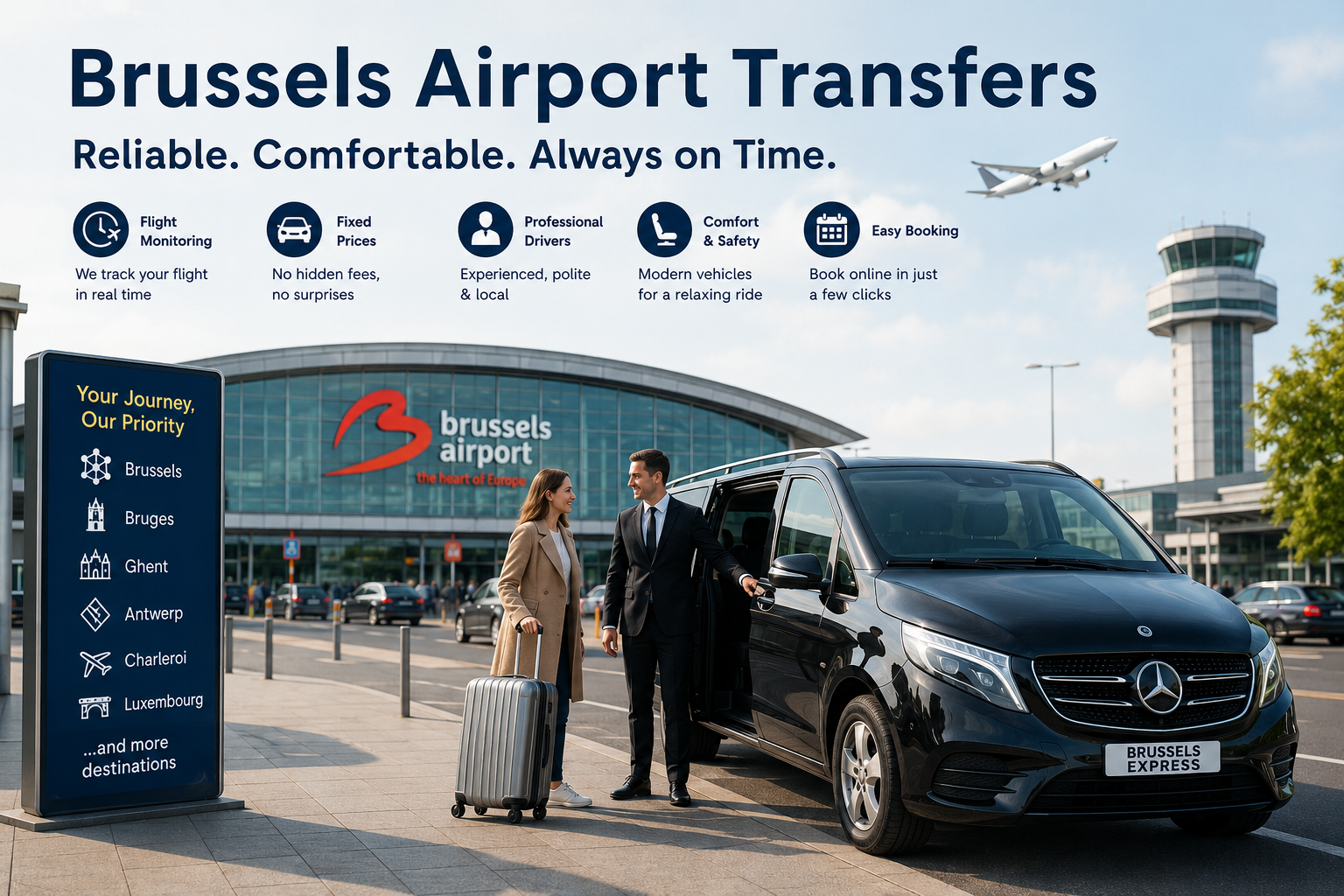
For business groups attending major international events, minivan airport transfers increasingly provide the balance between comfort, cost efficiency, and convenience.
Instead of dividing people into multiple taxis or navigating public transportation systems, the entire delegation remains together from airport arrival until hotel check-in.
The difference sounds small.
The experience feels completely different.
Imagine arriving at Brussels Airport after an intercontinental flight.
Instead of searching for transportation options, your driver is already waiting.
Luggage is loaded directly.
Everyone enters the same vehicle.
Conversations continue naturally.
No one gets separated.
No one waits.
No one needs directions.
The journey simply continues.
Why Cost Per Passenger Often Makes Minivans the Smarter Choice
Private Transfers Become Surprisingly Economical for Groups
Many people immediately associate private transportation with higher costs.
For larger groups, reality often tells a different story.
Consider an example:
Group of Six Global Tourism Forum Delegates
Taxi option:
- Two or three vehicles required
- Separate fares
- Possible waiting times
- Multiple payment arrangements
- Potential route variations
Public transport option:
- Individual tickets
- Luggage handling
- Transfers between services
- Time spent navigating
Minivan transfer option:
- One fixed price
- One shared vehicle
- Door-to-door transportation
- Unified arrival
Once the total transfer cost is divided among multiple passengers, the difference frequently becomes far smaller than expected.
And unlike public transportation, the service level remains dramatically different.

Time Matters More During Business Travel Than Leisure Travel
Every Hour Has a Purpose
Tourism professionals attending the Global Tourism Forum are not arriving for casual sightseeing alone.
Their schedules frequently include:
Pre-event meetings
Private discussions often begin before the conference officially starts.
Networking sessions
Relationship building happens throughout the event.
Investment meetings
Many delegates schedule side meetings with partners and investors.
Evening receptions
Formal and informal events continue after conference sessions end.
Time lost in transportation is not simply lost time.
It can mean missed opportunities.
For executives and international delegates, efficiency becomes part of the travel experience itself.
First Impressions Begin at the Airport
The Arrival Experience Shapes the Entire Visit
Major conferences create high expectations.
Brussels itself projects professionalism, international importance, and diplomatic significance.
The airport journey becomes the first real interaction visitors have with the city.
Arriving through crowded transport systems while carrying luggage and searching for directions creates one impression.
Stepping into a pre-arranged private vehicle creates another.
Comfort may seem like a small detail.
But comfort affects mood.
Mood affects energy.
Energy affects performance.
For delegates preparing for important meetings and presentations, these details matter far more than many travelers initially realize.
The Return Journey Matters Just as Much
Departure Days Create Another Wave of Pressure
Airport transportation challenges do not end after arrival.
Conference closing days often generate another concentration of travelers moving toward Brussels Airport at similar times.
Delegates suddenly begin thinking about:
- Flight departure schedules
- Traffic conditions
- Luggage handling
- Check-in times
- Coordination among team members
Pre-booked return transfers remove uncertainty entirely.
Instead of searching for transportation after several demanding conference days, the journey back becomes simple and predictable.